TL;DR Conf – a one day event about the emerging technology cycle driven by Post-PC devices and HTML5

TL;DR Conf is a one day event about the emerging technology cycle driven by Post-PC devices and HTML5. Speakers include thought leaders such as Mike Maples Jr. – Managing Partner at Floodgate, Scott Jenson – Creative Director at frog design, Pascal Finette – Director Open Innovation Group and WebFWD @ Mozilla.
TL;DR Conf takes place on March 30, 2012. More at http://www.tldrconf.com/

Realtime Cities Initiative: Welcome to Virtual Dubuque!

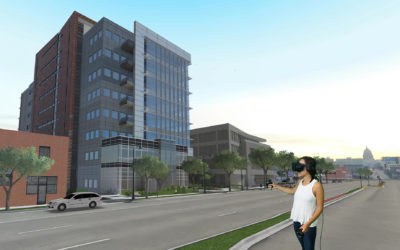
Introducing Virtual Dubuque, a premiere development of our new Realtime Cities initiative by Arch Virtual, built with ArchTech Engine.   This new community resource will provide free and easy to access windows into interactive, customizable 3D models of cities.  To learn more about how we can build a realtime model of your city or architectural project, send us a note here.  We’re currently seeking development partners to build new features, create custom content, and build out additional architecture and cities around the world, so please send us a note to learn more.

Over the past year,we have been partnering with local businesses and organizations in Dubuque, Iowa to develop features and sponsored content, including a project in the Historic Millwork District for a local real estate developer (coming soon!), as well as the Masonic Temple, where international members of Demolay will be working with industry pioneers in developing a world-class learning environment, using Virtual Cities as its core platform.

“We’re harnessing the same technology used to make the latest iPad apps and XBox 360 games, but we’re not making a game, we’re building dynamic and ever-changing models of cities that are designed to serve as true community resources that can be easily accessed directly from a website,” said Jon Brouchoud, Founder of Virtual Cities.

Using ArchTech Engine and the Unity3D platform, we’re now able to transforms buildings, geography and entire cities into realtime 3D environments that are easily accessible, and can be embedded on your website, or deployed to a tablet.  These interactive models can be geo-referenced to real-world coordinates, dynamically linked to databases, and layered with interactive content.

Virtual Cities by Arch Virtual - urban planning

As visitors explore virtual cities, links to websites and additional information about nearby buildings, parks, and businesses appear automatically.  For example, when you approach a restaurant, you can click through to read their menu.  If you’re near a historic building, you can learn more about its past.  Businesses and organizations can customize and enhance their space in the virtual model, layering it with more information or interactive features.

Proceeds from sponsorship and custom content are then re-invested in the ongoing development of the city model, enabling Realtime Cities to add more features, build new parts of the city, and refine models with more detail.

But a virtual replica is just the beginning.

Virtual Cities by Arch Virtual - Dubquque Iowa

“If you’ve ever experienced the Voices Gallery in the Millwork District of Dubuque Iowa, for example, you’ve seen how a building can be completely re-imagined into a destination that celebrates the unique architectural character of a place, yet transcends it to become something completely unique,” said Brouchoud.

“That’s really what Virtual Dubuque, and the Realtime Cities initiative is all about.  A replica of the city as it is now will certainly have interesting use cases, but I’m looking forward to seeing how cities can be re-imagined within an environment where anything is possible.”

Virtual Cities for architectural visualization and urban planning


Introducing the ArchTech Engine: Transforming buildings, cities and geography into realtime 3D environments

I am very excited to announce the launch of our new ArchTech Engine, a technology that transforms buildings, cities and geography into realtime 3D environments that are easily accessible, and can be embedded on your website, or deployed to a tablet.

These interactive models can be geo-referenced to real-world coordinates, dynamically linked to databases, and layered with interactive content.

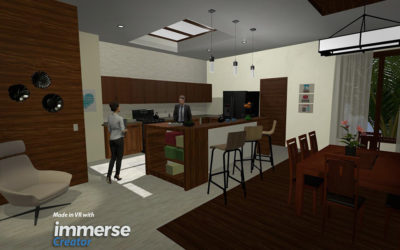
Transform your architectural drawings and 3D models of almost any format (including CAD and BIM) into information-rich applications that are perfect for architectural visualization, and city planning, as well as learning environments, military simulations, historical recreations, training environments and more. Students can interact within a more memorable learning environment, and achieve much greater retention over reading a textbook. All within a web browser or tablet.

Your application can be customized to suit your project’s specific needs. Make it multiplayer with voice and video communication or a single player experience and add non-player characters or an entire crowd of people to bring it to life.

To learn more about Arch Tech Engine, or to get started on your own project, visit www.archtechengine.com   Arch Tech Engine is built on the Unity3D, and was developed in partnership between Arch Virtual and Tipodean Technologies.


12 Arch Virtual Predictions for 2012

predictions for 2012

1.)  ’Apps’ become the primary access point for indie 3D online content.  Specifically, facebook and tablet apps.  The practice of downloading or accessing an ‘app’  is refreshingly simple norm-behavior to mainstreamers who remain eternally wary of downloading unfamiliar clients and browser plug-ins.  Late in 2012 (probably into 2013) virtual worlds people figure this out, and start ‘appetizing’ their content.

2.) Second Life will keep on keeping on.  No, SL won’t die in 2012.  I wouldn’t dream of posting this as a prediction, since I think it’s too obvious, but I’m going to count it because I’ve read so many other posts about the demise of SL, I have to push back a little.  The virtual sky isn’t falling (yet).  The Lab will remain committed to supporting existing users, who won’t budge.

3.) Consumer use of SL will dip slightly, but remain largely stable.  All but a handful of Second Life user-developers (edu, military, enterprise, etc.) will complete their transition (read exodus) to OpenSim and Unity that is already well underway.    This is a two-in-one prediction, but I think SL still has a strong, relatively stable base of consumer users – whereas all other users are looking for the next shiny thing, and get tired of competing for the fleeting attention of the Lab, who have long since shifted their development focus to other things (I’m guessing apps, see prediction #1).

4.) Unity3D will be the next shiny thing for virtual world folks throughout 2012.  I predict huge growth here in 2012.  Quite a few content creators will be completing their Unity learning curve this year, and will be delivering some seriously compelling non-game work examples that will further entice investment from virtual worlds folks.  Ironically, the trouble with game engines like Unity, from a virtual worlds perspective, is that just about anything is possible.  Once the “where’s my avatar?  where’s my inventory?” questions are answered when virtual world immigrants open Unity for the first time, and they find their footing in an ‘anything is possible’ environment, they’ll collectively dial in on some meaningful use cases and we’ll be off to the races.

5.) Virtual World people will desperately insist on perpetuating the term “Virtual World,” but they probably shouldn’t, and the rest of the world definitely won’t.  Virtual Worlds, as a reality, aren’t going anywhere, but this particular descriptive term is tied to far too many wobbly concepts to remain effective as a selling term.  ’MMO’ is getting tired too.  These terms will remain alive and well in academic publications for the next 50 years, but I hope we’ll find some new verbiage in 2012.  It’ll probably just be.. “app”.

6.) Some contrarian developer will discover a vast, untapped market and develop a carefully crafted, hugely popular and profitable Second Life sim (non xxx) that gets meaningful traction.  It won’t be enough to convince other developers.  Predicting that it will be ‘profitable’ almost guarantees I’ll get this one wrong, but it’s fun to think about.

7.) A third party, working directly with Google, will develop a powerful new multi-user, virtual world application for Google Earth using WebGL.  This is a roll-back from 2011 predictions.  My guess is that 2011 was a big top-secret development year for said app.  I’m going to take out ‘working directly with Google’ – even though I think they will be, I may not be able to prove it.

8.) Augmented reality isn’t going to be as huge as everyone thinks it will be.   This is a cheap shot, and another roll-back from my 2011 list, but there’s still a lot of buzz. So I think it counts.

9.)  Augmented reality actually gets some traction, but it’s not recognized as AR.  No, we won’t all be wandering around downtown holding our iPhones up to buildings clicking on advertisements like zombies.  But I’m thinking of games like PowerGig (uses a real guitar + XBox to teach guitar).  It’s AR, but nobody says AR.  See prediction #5.

10.)  Here comes Head Mounted Displays.  Last year, it got some traction.  By the end of 2012, there will be tremors of it becoming the next big thing.  Turn your iPhone into an 80″ screen only you can see?  Yeah, that’ll sell.   Seriously.  I really hope they get this right.. I’m ready, credit card in hand.

11.)  3D monitors, and 3D TV’s go nowhere.  They’ll keep force-feeding 3D movies, and it’ll survive, but flickerless next-gen 3D movies are desperately needed to keep the dream alive and it won’t happen in 2012.  This is a shame, but the honeymoon’s over.  2013 maybe it’ll be reframed, rebranded and renewed.  We’ll see.

12.)  Consoles open up.  We’ll see an advent of semi-indie content on consoles.  If not, they missed a huge opportunity.  I’m not saying they should open up to everything – that would turn into a huge mess, but I think it should be much easier for semi-professional content developers to push content out to consoles.


Results of Arch Virtual’s 2011 New Year’s Predictions: 7 out of 11

architecture in virtual worlds predictions

I didn’t do too bad on last year’s predictions (read the full post here).

1.) With the exception of mesh imports, not much will change in Second Life.   Pretty much nailed this one.

2.)  OpenSim will continue to steadily improve, but will also remain relatively quiet.  Ditto

3.) Unity will be acquired by Autodesk, and will become the foundation of a whole new wave of ‘realtime’ integration with their existing products.  I didn’t get this one, but I’d bet that any insiders on acquisition talks at Unity or Autodesk would agree I was close.  I think Unity’s in it for the long haul (measured in months in this industry ;-)

4.) The U.S. economy will slowly start to show signs of recovery, but the number of unemployed architects will decrease only slightly.  I bet I got this one right, but its a tough one to measure.  I’ll count it in the accurate column until someone an prove me otherwise in comments.

5.) A third party, working directly with Google, will develop a powerful new multi-user, virtual world application for Google Earth using WebGL.  Didn’t get this one, but I think I was a year too early.  I’ll promote this one to my 2012 list.

6.) The popularity of WebGL will grow exponentially, but 2011 will be a tinkering year for it.  Disco.

7.) Avatar-less access to virtual worlds will gain traction.  Another tough one to measure, but I won’t count this one as accurate because I’d say the avatar-less traction is building more in games, not necessarily ‘virtual worlds’ by definition.

8.) Mobile device access to virtual worlds won’t be as huge as everyone thinks it will be.  Yup.

9.) Augmented reality isn’t going to be as huge as everyone thinks it will be.  Yeah, and I’d even go so far as to promote this one to the 2012 list too.

10.) A new class of head-mounted displays will FINALLY start to gain some mainstream attraction.  It’s about time.

11.) At least one multi-user, virtual world accessed via game console (not Playstation ‘Home’) will start to gain real momentum by the end of 2011.   It’s out there, sort of, but but I wouldn’t call it ‘real momentum.’  Definitely not virtual worlds by pure definition.

ArchiCAD and Revit to Unity3D: more about architectural visualization with Unity3D and comments from readers

Below the fold are some additional points raised by YouTube, Twitter and blog commenters around the topic of importing architectural BIM models into Unity3D.

One additional point I want to make is the important distinction between Unity3D best practices for game design vs. best practices for architectural visualization.  The requirements for reducing poly count and subsequent draw calls with Unity for producing a game is a completely different ballpark than what is required for most architectural visualization projects.  While you certainly want to achieve the best possible performance, sometimes the geometry you retrieve from BIM could very well generate a very high number of draw calls, and that’s fine!  Well, most of the time anyway..

Early on, I read somewhere that published Unity3D builds should try to be under 100 draw calls.  Phew!  When some of my Revit models came in at 1,500 draw calls, I thought it was a lost cause.  But you really have to think about your intended audience, their computer hardware, and the method you use to publish your models.  For example, most of the projects I’ve generated are most often installed as stand-alone apps on the client’s main office computer, where they bring up the virtual walk-through when they want to do a demo in-house.  They aren’t as concerned with getting it published to a web browser for anyone in the world to see, they just want a solid realtime walk-through to show off at the office to impress potential clients.  Unity works perfectly for that.

In cases like this, depending on the machine they’re running the demo from, you can afford to get away with a model geometry that isn’t completely optimized.  You can go ahead and publish with a much higher number of draw calls, and maybe even run with a full set of dynamic lights, and all kinds of bells and whistles that probably won’t bog down the demo.

There are lots of game developers who would reject this possibility as sloppy, sub-standard work, but the bottom line is – if 1500 draw calls is the best you can achieve within your abilities, you don’t have the time or ability to learn how to bake lightmaps or reduce the geometry within your software portfolio’s capabilities, and it works for your intended use case, then so be it!  It’s still much, much better than the alternative, which is to attempt a realtime walk-through within your BIM application (not likely!) or to produce an animation, which will be much more prescriptive than a realtime walk-through and probably end up taking longer than it would to port the project over to Unity3D.

For those not acquainted with architectural software, and more in the mindset of producing games for a much larger audience, it may seem preposterous, but even if your published Unity build crawls along at 10 frames-per-second, it’s *still* better than the alternatives, imho.  No other medium enables you to experience a design in such a holistic way as a realtime walk through in a game engine, and it’s well worth the effort.

On top of that, there are all kinds of tricks-of-the-trade, best practices, and new tools emerging around how to make the best use of high-poly models.  There are so many powerful options within Unity’s latest releases that can help tackle inefficient geometry, I think it will become increasingly feasible to leverage Unity for even the most complex models.

Of course, if you’d rather not worry about this at all, and would rather turn the project over to us to do the work for you, we can convert your CAD, BIM or 2D blueprints into Unity3D walk-through – just send us a note for an estimate.


Here are some comments from Twitter, YouTube, and this blog, adding some additional perspective on the topic of using Unity3D game engine for architectural visualization by importing models from BIM applications like ArchiCAD and Revit.

Stefan Boeykens says:

I’m combining Unity3D with ArchiCAD (also BIM software) and found that the best workflow is passing through Cinema4D. ArchiCAD has a free Cinema4D exporter, supporting updates and the Cinema4D-Unity3D link is also working fairly well using FBX. That way, you can update the BIM model, reload it in the visualization software and reload it in the Game Engine, leaving most of the scene intact.
I assume that the same goes for Revit, but passing by 3ds Max instead of Cinema4D.

I discussed my workflow from BIM to Game Engine in my CAAD Futures 2011 presentation:

http://www.slideshare.net/stefanboeykens/using-3d-design-software-bim-and-game-engines-for-architectural-historical-reconstruction

@vsaitoo (Dave Buchhofer) writes via Twitter:

“ive done a few revit to unity projects, but with the help of a lot of mostly automated scripting to clean things up.”


badbii on YouTube comments:

Best way to scale objects = import settings! You can adjust everything to be x1 y1 z1 in game!

State of Play: Can we import BIM models into realtime Unity3D game engine?

Following last week’s post about the new Rutgers School of Business we published into Unity3D game engine, there were a lot of questions about whether we had imported the BIM file directly from Revit, or if there was an intermediate process necessary to make that work.

In the past, I had been able to export Revit models, and use them to create Unity3D walk-throughs, as seen in this video tutorial: Importing Revit into Unity3D.   However, in releases following Revit 2010, the exported FBX model has become much more difficult to use.  Materials aren’t assigned, geometry comes in as one linked mesh, etc.  I haven’t done a lot of testing with this personally, but from what I’ve been told, it doesn’t work as well as it did in that video tutorial that used Revit 2010.

Geometry generated with Revit and other BIM applications is high poly for a good reason, so without some kind of intermediate process that can process high poly models down to intelligently reduced realtime-ready formats, there won’t be a dynamic connection between BIM applications and Unity3D any time soon.

In the meantime, we’ve come up with a very efficient method of interpreting BIM models and blueprints into a more realtime-friendly format that runs well in Unity3D, and we offer this as a service.  Send Arch Virtual your BIM, CAD or pdf blueprint files, and we will produce a Unity3D project that can be published into any format Unity3D can export to: embedded in a web browser, installed as a stand-alone applications, accessed from an android mobile device, iPad, etc.   To contact us about your project, send us a note here: http://archvirtual.com/contact/


Customer-Created Design: Virtual reality and realtime design enables seniors to design their own community spaces

There’s a fantastic snippet in this video, about 2 minutes and 58 seconds in, that does a great job of capturing the spirit of this project.  This is a group of senior citizens looking at the virtual world of Second Life projected on a wall in front of them, and you can hear the almost visceral reaction the group has to watching their suggested design changes to a new senior living community take shape before their eyes.  A single window was turned into a glass wall, which suddenly lets in more light, and opened up more views to the outside.  The impact of this design change was immediately evident to everyone in this session, which was held simultaneously in a conference room in Madison, Wisconsin as well as a platform in the sky above Architecture Island in Second Life.

My long-time friend and colleague, Derrick Van Mell, of Van Mell Associates, had recently introduced me to Rita Giovannoni, CEO of Independent Living, and we sat down at a coffee shop for a quick demo of Second Life. Derrick had been following my interest in virtual worlds since the very beginning, and knew Rita was interested in a fresh perspective on the design process for her next project.  Having led construction of 3 previous senior living facilities, and entering the early design planning for a 4th facility, she was eager to find a unique approach to design.

I opened Second Life on my laptop, and walked my avatar into an empty virtual room. So far, so good, but Rita looks hesitant. Inside, my avatar reaches up and slowly starts lowering the ceiling down until it’s hovering just above his head. “That’s way too enclosed and claustrophobic! We don’t want that.” Rita immediately reacts.  I then slowly raised the ceiling up higher. “That’s too high – it looks too institutional.” I lowered it half-way down, until it was “just right.” We went through other parts of the building, and similarly modified the design in realtime, until it was all “just right.” Rita immediately recognized that this was not only a truly unique way to visualize design ideas, but also an opportunity to actively engage others in the design process itself.  We started brainstorming ways Independent Living might be able to invite prospective residents to participate in designing their new facility.

We decided to work with focus groups of prospective residents who were considering a move into a facility like the one Independent Living would soon be building. We invited Jim Gersich, Partner-in-Charge at Dimension IV Madison Design Group, which has a lot of experience with designing senior living facilities, and he offered to host the session in his studio’s conference room.  We projected Second Life onto a wall, and invited the group to imagine how they would like the new facility to feel and function. I had been concerned that the virtual modeling might cause some motion sickness, or may even be just too silly to take seriously as a design medium, but there was no hesitation with this group, they got it immediately.

The movable ceiling trick was all it took to get their attention.  It never ceases to amaze me how strong of a reaction people have to watching my avatar slowly being enclosed by a lower and lower ceiling.  They can literally feel the difference it’s making to the way the space feels.  Therein lies the whole idea behind this endeavor – to use virtual reality to immerse people in a simulated environment, where they can immediately see and feel the impact of design ideas in 3D as the discussion unfolds, in realtime.  What’s more is that they can actually suggest design ideas, and watch their ideas take shape before their eyes.

All of the residents did a great job providing invaluable feedback on the design of the new facility, and I think they each left with a sense of ownership in the project, having contributed to this early ideation phase.  As we prepared for this session, it was tempting to assume we knew certain things about how the design would layout, and to start preparing design solutions ahead of the focus groups.  But as we quickly learned, many of those assumptions turned out to be wrong, and this group had a lot of great ideas we would never have thought of.

Not every project is right for bringing end-users into the design conversation this way, but there are always numerous project stakeholders with a vested interest in being sure the building feels and functions exactly as they need it to.  Working within a virtual environment not only helps everyone visualize the design more holistically, but it opens up the opportunity to take steps toward getting it “just right,” and ensuring the project more closely reflects the goals of the organization.

I think one of the participants concluded the session well when she said,  ”I just so appreciate that you’re willing to listen, and to get that input. Because, you could just slap up a building, and say ‘it’s for rent, take it or leave it, that’s the way it is’ – and people would do that. They do it all the time.”

If you’re interested in using virtual reality in your next design project, send us a note at info (at) archvirtual.com.


$85 million Rutgers School of Business recreated virtually with Unity3D game engine

Construction is now officially underway on the new Rutgers School of Business, designed by the renowned architecture studio Ten Arquitectos (frequently covered by arcspace), but you don’t have to wait until construction is complete to explore the new design!  Arch Virtual recently completed a virtual prototype of the new facility for Rutgers University, replicating the design based on architectural CAD drawings, BIM models and blueprints provided by the architect, then publishing them into realtime 3D with the Unity3D game engine.  See a video preview of the virtual model below, and see some screenshots of the model here.

Rutgers University leveraged the best of several virtual platforms throughout design development of this project. In early design phases, Arch Virtual replicated the design in Second Life, which was ideal for recreating the schematic and conceptual models and making the design accessible to students and faculty (seen here).  That model was then brought into OpenSim, where it was integrated into a more comprehensive model of the campus, including more of the context surrounding the Business School’s new building site.

When final construction documents were ready, we interpreted the architect’s CAD drawings and BIM model with Autodesk Maya, that could be brought into the Unity3D game development engine. Rutgers worked with Tipodean Technologies to export their OpenSim islands, including buildings surrounding the new business school. Tipodean converted them into Collada mesh format, along with the textures, which were then added to the Unity3D environment. The final result is a blend of the architectural model alongside meshes exported from OpenSim.

With the model in Unity, Rutgers will now be able to embed the virtual model into a variety of formats. For example, they can embed the model directly a website or Facebook page, but could also publish the same model to be accessible from Android or iPad mobile devices, or as stand-alone applications that can be installed on a Mac or PC and run locally without being online, and at full screen.

To follow the progress of the virtual Rutgers School of Business, join the Rutgers University Virtual Worlds facebook page at: http://www.facebook.com/ruvw3d

To learn more about how Arch Virtual can translate your blueprints, CAD, or BIM file into a virtual experience, contact us here. http://archvirtual.com/?page_id=3388


3D mesh imports now (finally!) possible in Second Life! No, seriously… I have screenshots to prove it.

This long awaited ‘holy grail’ feature in Second Life has now finally arrived on the main grid!  The subject of numerous false starts, April fool’s jokes, and much controversy – it is now possible to import 3D models directly into Second Life.  The implications from an architectural urban design and city planning perspective are obvious.  Having to rebuild architectural models with a patchwork quilt of 10 meter prims was only feasible for the most dedicated and patient developers, and the frustration of abandoning 3D models that already existed as a matter of daily practice in architectural software in order to build the same model all over again with prims just wasn’t an easy sell to most would-be SL residents hoping to use the platform for architectural visualization and collaboration.

Getting a model from Revit  - or any CAD / BIM application into Second Life still won’t be as simple as drag-and-drop, since the model still needs to be processed into a ‘realtime ready’ format capable of being imported and displayed properly in SL.  But the last major hurdle to 3D model imports has finally been crossed, and should make this virtual world much more feasible as a tool for architecture-related applications.

One drawback of using mesh vs. prims is that 3D mesh models imported can’t be easily modified on a granular level the way prims can.  The use of bite-sized prim pieces remains an innovative and game-changing opportunity from an architectural collaboration perspective.  In fact, Studio Wikitecture may not have been possible without it, given out dependence on the ability of each contributor to modify and refine each design.

collada architectural model

Ironically, one of the unintended consequences of mesh imports was the fact that prim size limits had to be increased in order for larger mesh objects to work well.  This may actually increase the utility of prims over mesh, in many cases, since the prim size limitation was one of the more significant challenges for using prims to build larger scale architectural works.  I believe the combination of mesh and prims is incredibly powerful, and I definitely don’t see mesh replacing the usefulness of prims any time soon – even for newly developed projects.

But is it too little too late?  So many of the familiar major developers and content creators have since left SL in recent years.  While lots of new and highly creative developers still work there, and the economic stats of SL seem to be relatively stable, it remains to be seen whether the advent of mesh in Second Life will attract the kind of growth and attention witnessed in 2006 and 2007.  My guess – and my hope – will be that this new feature sees slow, steady progress and adoption, leading to truly meaningful, effective and functional projects that showcase the potential for virtual worlds.

3D architectural dae collada file imported


Page optimized by WP Minify WordPress Plugin